





What Players Want To Know Before A Cashout
Most players do not start by asking about games. They ask a simpler question: how quickly can money move from a balance back to a bank card, e-wallet, or another approved payment method? That is why the withdrawal journey deserves its own breakdown, especially for readers in Australia who want to understand the process before they deposit anything.
Picture a common situation. You win late in the evening, open the cashier, and expect the money to land right away. Then you notice a pending stage, an identity check, maybe even a confirmation email. Nothing is necessarily wrong - it is just that payout speed usually depends on several moving parts, not one button.
A good withdrawal experience is normally built on four things: account verification, payment method matching, clear limits, and reasonable review times. If one of those elements is missing, delays often appear. Players who understand this early tend to make smoother choices and avoid the usual frustration that comes from guessing.
For 2026, readers also care more about control. They want to see limits before requesting a transfer, know whether pending requests can be cancelled, and understand what happens if the same method used for deposits is no longer available. Those are practical questions, and they affect the real player experience much more than flashy marketing text.
How The Payout Flow Usually Works
The cashout path often looks simple on the surface: open the cashier, choose a method, enter an amount, confirm the request, and wait. In practice, there are usually small checks between each step. The platform may review account details, compare deposit history, or ask the player to confirm identity if that has not already been completed.
Imagine you have already played for a few days and now want to move part of your balance out. Usually, players go to the account wallet, review available methods, and compare what can be used for removal versus what was only accepted for funding. That difference matters because a method supported for deposits is not always identical to the one used for payouts.
The review stage is where expectations should stay realistic. Some requests pass quickly, while others remain pending because of routine internal checks, public holiday timing, banking hours, or incomplete profile information. A player may see the request approved on the platform side, but the receiving provider can still add more time before the funds become available.
Another point many readers miss: approval time and arrival time are not the same thing. Approval usually means the operator has finished its part. Arrival depends on the external payment channel. This is why two people can request similar amounts on the same day and still see different outcomes.
Jackpot Jill Withdrawal Time Expectations In 2026
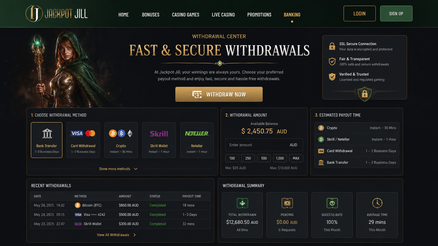
When people talk about payout speed, they usually mean the full wait from request to usable funds. In 2026, expectations are higher than ever, but smart players still treat timing as a range rather than a promise. Internal checks, payment rails, and account history all influence the final wait.
If you are requesting a small amount after your account has already been verified, the process may feel straightforward. If it is your first removal, or if you recently changed payment details, the wait can stretch because the platform may pause the request for extra confirmation. That is normal risk control, not necessarily a sign of trouble.
The useful mindset is this: look at timing in stages. First comes internal review. Second comes approval. Third comes transfer by the selected method. Once you break it down that way, the experience becomes easier to read and less stressful to follow.
What Can Slow Things Down
Delays often come from avoidable mistakes. The most common one is trying to withdraw before the profile is fully verified. Another is using payment details that do not match the name on the account. Even a small mismatch in personal information can create a manual review that adds extra waiting time.
Think of a player who signs up quickly, deposits, wins, and immediately requests a transfer without uploading documents first. Usually, the platform responds by asking for identity proof, address confirmation, or evidence of payment ownership. The request then pauses until everything is reviewed, which turns a simple action into a longer process.
Bank processing windows can also matter. A request approved late on a Friday may not move at the same pace as one approved during a regular weekday morning. Some methods update almost continuously, while others depend on banking schedules, cut-off times, or additional anti-fraud checks.
Large requests sometimes receive more attention than smaller ones. Not because something is wrong, but because higher amounts can trigger deeper checks. Players who understand this are less likely to panic when a bigger transfer takes longer than a routine one.
Verification Delays Are More Common Than Players Expect
Verification is often treated as a boring formality, yet it is one of the biggest factors behind a slow payout. Most platforms need to confirm identity, age, and payment ownership before releasing funds. If the uploaded documents are blurry, cropped, expired, or inconsistent, the review may restart.
Suppose you upload a photo with cut edges or a statement where the address does not fully match your current account profile. In many cases, support will ask for a new file. That extra round can add hours or even days depending on when the request is handled. Players who prepare clear documents early usually avoid this bottleneck.
Method Availability Can Change The Outcome
Not every funding option works the same way for cashing out. Some methods are quicker to approve, some are easier to track, and some may require players to choose an alternative route if direct return is not supported. That is why method selection should be part of account planning, not an afterthought.
Picture a player who deposited with one tool, then wants to receive funds through another because it feels more convenient. Often that is where questions begin. The platform may require a return to the original route first, or may ask for extra evidence before allowing a different destination. That does not always block the request, but it can slow it down.
Choosing A Method That Fits Your Routine

A good payment choice is not only about speed. It is also about familiarity, tracking, fees on the receiving side, and how easily the player can confirm ownership if asked. For many users in Australia, the best option is the one they already understand and can monitor without stress.
If you usually check your balance on mobile while commuting, you probably want a method that gives clear status updates. If you prefer a traditional banking trail, you may accept a slower route in exchange for a familiar process. Neither approach is automatically better - it depends on how you manage your money.
Before requesting funds, it helps to compare practical features side by side:
Method Type | Typical Review Convenience | Arrival Pattern | Best For | Main Watch-Out |
|---|---|---|---|---|
Bank card return | Familiar for most users | Can vary by issuer | Everyday players | Bank posting times differ |
Bank transfer | Clear record keeping | Often steady but not instant | Larger planned cashouts | Banking cut-off windows |
E-wallet style option | Easy status checking | Often quicker after approval | Frequent smaller transfers | Account matching is important |
Alternative digital method | Flexible in some cases | Depends on provider rules | Players with specific preferences | Support for payouts may differ from deposits |
The table does not promise a fixed result, but it does show how players often think about real use. Usually, the smoother choice is the method that matches the account name, has already been used successfully, and does not require last-minute changes. Simplicity saves time.
Why Many Players Prefer Consistency
Consistency removes questions. If deposits and removals follow the same ownership pattern, review tends to feel more predictable. Support teams can read the history faster, players know where to look for updates, and fewer surprises appear during the approval stage.
Imagine using one method for funding, another for refunds, and a third for everyday spending. It can work, but it creates more points where confirmation may be needed. Players who keep their payment path simple usually spend less time explaining their account and more time actually receiving funds.
Managing Limits, Pending Requests, And Partial Cashouts
A payout request is not just about speed - it is also about amount. Players often discover too late that minimum and maximum limits shape the process as much as the payment method does. A small request below the minimum may fail immediately, while a very large one may need to be split or reviewed more carefully.
Here is a typical scenario. You have a solid balance and want to move all of it at once. Before confirming, it is worth checking whether there are daily or transaction-based limits, whether multiple requests are allowed, and whether the pending request can be cancelled if you change your mind. Those details influence planning in a real way.
Partial cashouts can be useful for players who want to keep some money available for later sessions while still locking in part of their winnings. That approach is often more practical than waiting until the balance grows large and then trying to move everything in one action. Smaller, planned removals may also be easier to track.
Still, players should avoid turning the cashier into a trial-and-error screen. Repeated cancelled requests, constant amount changes, or moving funds in and out impulsively can create confusion. A calm plan works better: review limits, choose the amount, confirm once, then monitor the status properly.
What Pending Really Means
Pending does not always mean delayed in a negative sense. Very often, it simply means the request has been received and is waiting its turn in the review queue. That stage can include automatic checks, manual review, or payment routing preparation.
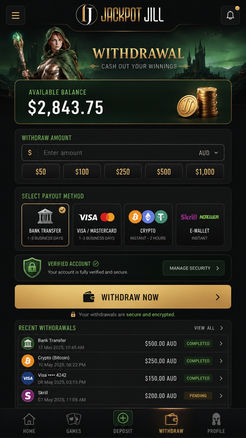
If you submit a request and see no instant movement, the useful next step is not to resubmit the same request five times. Usually, players do better by checking account messages, confirming whether documents were requested, and reviewing the payment history section for status notes. One clear request is better than several overlapping ones.
Support, Account Tools, And Responsible Control
Good support matters most when something is unclear, not when everything goes right. A strong player experience includes readable cashier notices, a transaction history that makes sense, and support channels that explain what stage the request is in. That does not mean every answer is immediate, but clarity is important.
Suppose you have been waiting longer than expected and there is no visible reason in the payment history. Usually, the next move is to contact support with the relevant details ready: request amount, time of submission, chosen method, and whether the account has already completed verification. Clear information helps support answer faster and with fewer back-and-forth messages.
Account control tools also matter. Players should be able to review spending, set personal boundaries, pause activity when needed, or step back for a cooling-off period. These features are part of a mature platform experience because cash management is not only about winning - it is also about control, timing, and decision-making.
For adult readers in Australia, that practical mindset is especially important in 2026. A platform can feel smooth when entertainment and money management stay balanced. If play starts feeling rushed or emotional, a pause is often the best choice before making any new deposit or payout decision.
When It Makes Sense To Contact Support
Support is most useful when you can ask a specific question. "Where is my money?" is understandable, but "My request was submitted on Tuesday, verification is complete, and the transfer is still pending after approval" gives the team something concrete to check. Precision helps.
Imagine two players contacting support at the same time. One sends a vague complaint. The other provides the request stage, payment method, and recent account changes. The second player usually gets a more actionable reply because the context is already there. Good support conversations start with clear facts.
Practical Tips For A Smoother Cashout Experience
The best time to prepare for a payout is before you ever need one. Verify the profile early. Keep account details consistent. Use payment tools in your own name. Read the limits before playing. These steps are not exciting, but they remove most of the friction players complain about later.
Consider a simple routine that many experienced users follow. First, they finish profile checks after registration, not after winning. Second, they make a small test transaction when available, just to understand how the cashier behaves. Third, they keep screenshots of confirmations and transaction history in case support needs context. That routine does not guarantee speed, but it does reduce confusion.
Another useful habit is separating approval expectations from bank arrival expectations. If the platform marks a request as completed, the next wait usually belongs to the payment provider, not the gaming account itself. Knowing that difference helps players judge the situation more fairly.
And finally, treat cashout timing as one part of the overall experience, not the only metric. A slightly slower but clearer process can feel better than a fast but confusing one. Most players prefer visibility, consistency, and good communication over empty promises.